Moscow Tutors: Everything that you need to know about GCSE 2018 exams

Image result for gCSE exams

Introduction to GCSE Exam 2018

Find everything you need to know to succeed in your GCSE Exam 2018 with Moscow Tutors.

You want to get the best possible result in your GCSE exams. We are here to help! From stats, tips and tools, we have a comprehensive set of materials to help you get the best result possible.

Our professional tutors will help you:

  • Getting Started
  • GCSE Subjects
  • Revision Tips & Advice
  • Study Resources & Tools

Learn Cambridge O Level Literature in English (2010) with Moscow Tutors

Moscow Tutors: Cambridge English Activities for kids

Each activity will help children practise at least one of the skills we test in our Cambridge English: Young Learners tests – reading and writing, listening or speaking. They also include words taken from the word lists used to create these exams.

Image result for english for kids

http://www.cambridgeenglish.org/learning-english/parents-and-children/activities-for-children/pre-a1-level/sing-and-learn-at-the-zoo/

Moscow Tutors: Cambridge A & AS Level for students in Moscow and Saint Petersburg

Image result for students

The General Certificate of Education Advanced Level, or A Level. This is the ‘gold standard’ of Cambridge and is accepted as an entry qualification by universities of the European Union and elsewhere around the world. These exams are usually taken after 13 years of education and are based on approximately 360 hours of guided learning per subject, normally over a two year period.

Typically, UK university entrance requirements insist on three passes at grade C for academic courses in established universities. Very popular courses often require higher grades with medical schools asking for grades of AAB and the highly selective universities of Cambridge and Oxford requesting at least AAA. Good A Level grades can also be a key for our students to be eligible for admission to all the world’s major universities.

The subject content of each of the A Level syllabuses  has been subdivided into two parts: the AS syllabus content which is expected to be covered in the first half of the course, and part two of the syllabus commonly referred to as ‘A2’. This flexible approach enables students to choose from three options:

  • Take all A Level components in the same examination session at the end of a course of study, usually at the end of the second year (Year 13)
  • Follow a staged assessment to an A Level by taking the AS qualification in one examination session, and the A2 assessment in a subsequent session
  • Take the AS qualification only – either at the end of a one-year or two-year course.
NOTE: The A2 examination cannot be taken as a standalone qualification.

AS Levels may be taken as a freestanding qualification and are accepted in all UK universities. They carry half the weight of an A Level so, for example, students may be admitted with suitable grades in two A Levels and two AS Levels. Details of the tariff operated by the UK Universities are given on the http://www.ucas.com UCAS website.

Call us now or email for  one-to one consultation with Moscow Tutors.

Learn Cambridge International AS and A Level Mathematics with Moscow Tutors

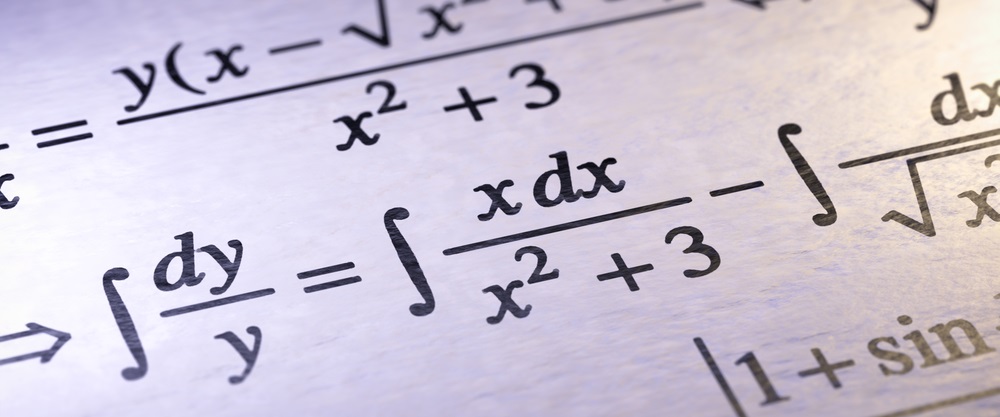
Cambridge International A Level Mathematics develops a set of transferable skills. These include the skill of working with mathematical information, as well as the ability to think logically and independently, consider accuracy, model situations mathematically, analyse results and reflect on findings.

Learners can apply these skills across a wide range of subjects and these skills equip them well for progression to higher education or directly into employment.

At AS level, teachers can choose from three different routes to Cambridge International AS Level Mathematics: Pure Mathematics only, Pure Mathematics and Mechanics, or Pure Mathematics and Probability & Statistics.

At A Level, teachers can also choose from different routes to Cambridge International A Level Mathematics depending on the choice of applied mathematics (Mechanics and/or Probability and Statistics).

Mathematics syllabus for 2018

Click to access 203041-2017-2018-syllabus.pdf

Image result for a level mathematics

Moscow Tutors A and AS level languages courses for students

Moscow tutors is proud to help students is all A and AS level languages courses . Our professional teachers help prepare students in all these subjects.

Group of students

Skype English lessons online from any location worldwide.

Learning a language on Skype is flexible, effective and fun. Start speaking English from the very first lesson. Connect with native speaking tutors and learn online from home or work at times to suit your lifestyle.

Call now or send a request for lessons.

Girl looking in a laptop and listening to something

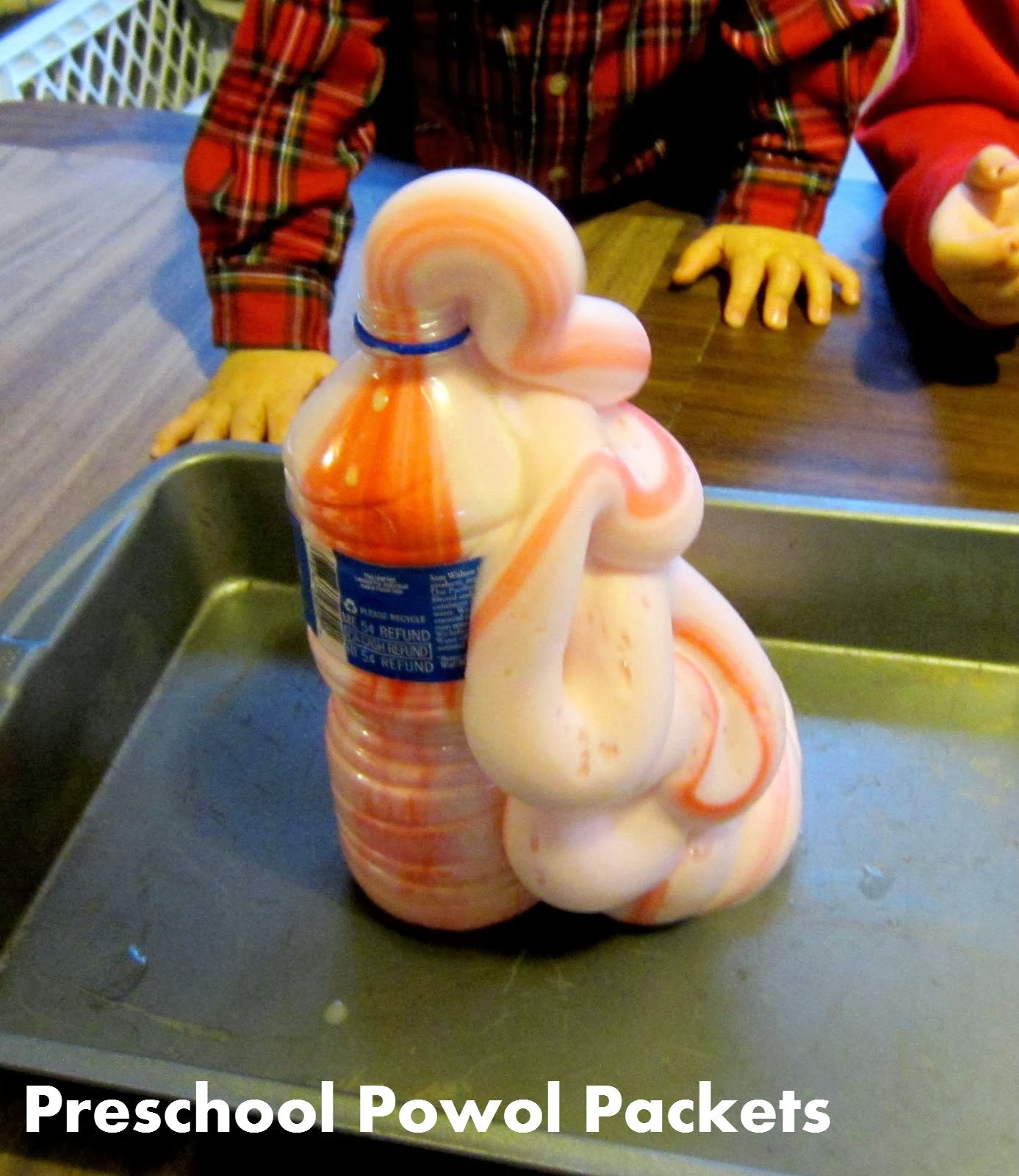
Moscow Tutors Science project for kids: Elephant Toothpaste

Science Experiment: Elephant Toothpaste

This exciting science experiment works great in a discussion on reactions, as a demonstration, or as an actual experiment.  To use it as an experiment, perform it once with your child, then ask your child what might happen if you changed the amounts or left out an ingredient. Let her direct the experiment!  Also, the foam created is safe to touch.  It is simply water, oxygen gas, and soap, so if your child has no soap allergies, she can experience and experiment with the texture of the foam!

How to make Elephant Toothpaste:

1.  Set a soda pop bottle in the middle of a pan to catch the toothpaste.
2. Mix these in a separate container and swirl together for a minute.  The yeast will catalyze (or speed up) the reaction.  Woo hoo!

** 2 Tablespoons warm water
** 1 teaspoon yeast

3.  Mix these in your soda pop bottle:

** 1/2 cup 6% hydrogen peroxide.  It is important to use at least 6%.  You can use 8% or more (available on Amazon), or you can use Salon Care Professional Stabilized Formula.  20 Volume Clear Developer from Sally Beauty Supply works fine too. 3% from the grocery store will NOT work as well.  🙂
** 4-5 drops food coloring
** squirt of dish soap

4.  Pour the yeast mixture into the soda pop bottle…and be amazed!

If you’re working with older kids, you may be interested in how it works:

The reaction is summarized by this formula: 2 H2O2  –>  2 H2O + 02.

Hydrogen peroxide (H2O2) naturally breaks down into water and oxygen.  It is stored in opaque containers to help slow down this process.  Catalase (an enzyme in all living things, including yeast) speeds up the reaction.  Dish soap catches the oxygen and makes bigger bubbles and the food coloring makes it look cool.  The foam and bottle feel warm because the reaction is exothermic–it releases energy as heat.